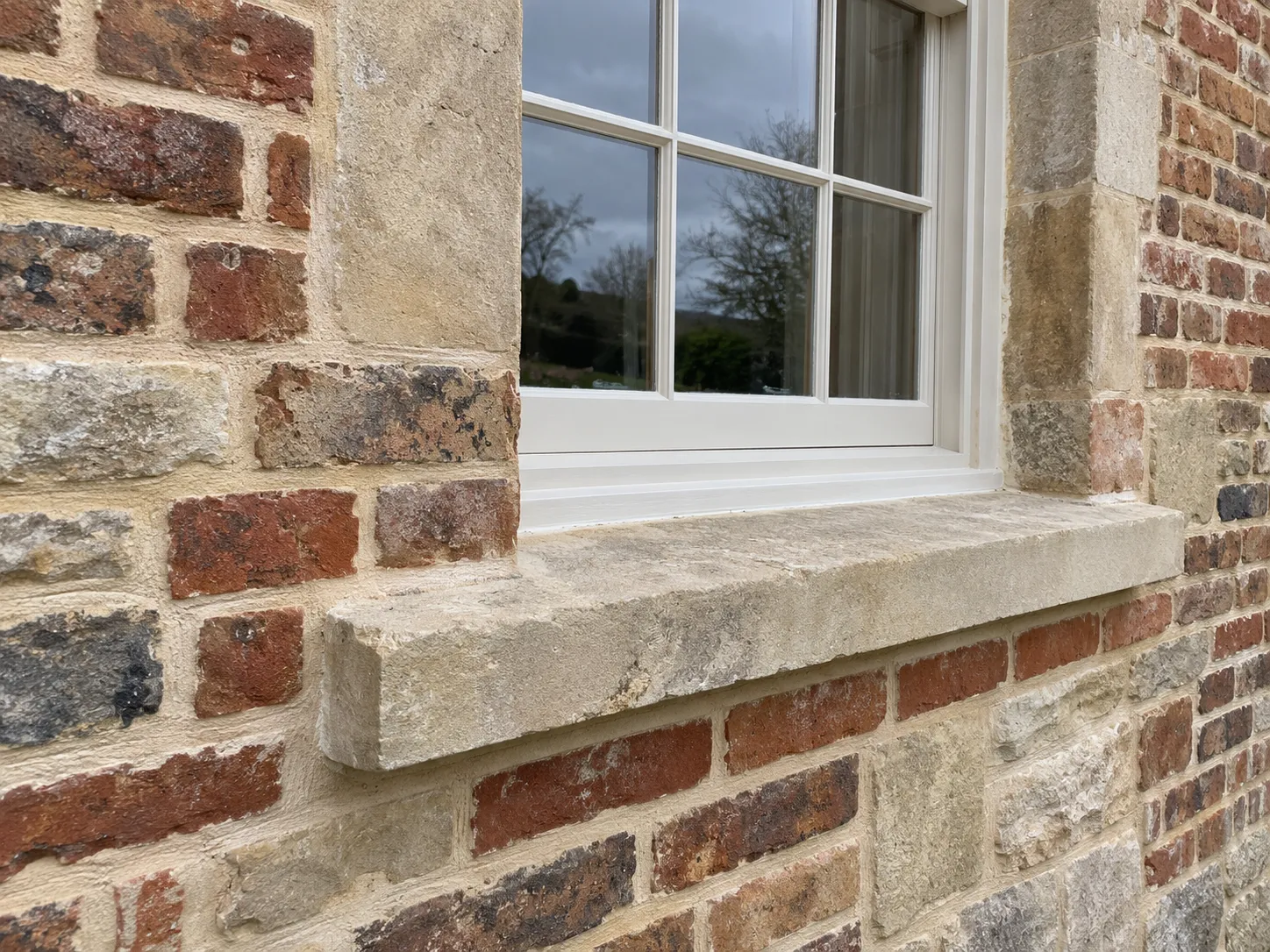
Repointing and restoring older buildings: get it right
Older buildings were built to breathe. Solid brick and stone walls take in moisture from rain and let it dry out again through the mortar and render. Modern materials can stop that happening. Damp patches, flaking bricks and crumbling stone often follow well-meant repairs made with the wrong mix.
Know when repointing is due
Mortar is meant to wear faster than the bricks or stones around it. It’s the sacrificial part of the wall. Repointing is due when joints are recessed more than a few millimetres, when the mortar crumbles to the touch or when gaps let water run into the wall. A whole building rarely needs it at once; exposed walls and chimneys usually go first.
Signs worth investigating:
- Mortar you can scrape out with a key, or that has fallen out of the joints.
- Damp patches inside that appear after rain.
- Bricks or stones with flaking faces, often next to hard cement repairs.
- Plants growing out of the wall.
- Cracks that run through bricks or stones, not just along the joints.
Cracks deserve care. Fine cracking along the joints is common. Cracks that are wide, stepped or growing can point to movement and need an assessment by a surveyor or structural engineer before anyone fills them.
Choose the right mortar
Many buildings put up before the middle of the twentieth century were laid in lime mortar. Repointing them with hard cement mortar traps moisture in the brick or stone, so the masonry decays instead of the joint. A good restoration specialist will identify the original mortar and match it in strength, colour and texture.
Ask how the old mortar will come out. Hand tools are slower but less likely to damage the edges of bricks than an angle grinder. Ask about the finish of the joint too: its profile affects how well the wall sheds water as well as how it looks.
Brief a restoration specialist
Look for a business with experience of buildings of the same age and construction as yours. Ask to see photographs of finished work, ideally on similar walls, and visit a past job if you can.
Ask every restorer:
- Which mortar mix they propose, and why.
- How they will rake out the joints and protect windows, doors and planting.
- Whether scaffolding, access and waste removal are included.
- What weather stops work, as lime needs protecting from frost and strong sun while it cures.
- What guarantee they give on the work.
Check permissions first
Listed buildings, heritage properties and conservation areas often need consent for repairs that change materials or appearance, and sometimes even for like-for-like work. The rules differ by country and region. Ask your local authority’s conservation or heritage officer before work starts. Unauthorised changes can be expensive to reverse.
Fix the cause of damp, not just the symptoms
Repointing helps keep water out, but it won’t fix a blocked gutter, a leaking downpipe or ground built up above the floor level inside. Check these first; they’re often the cheaper fix. Where a wall has been soaked by a leak or a flood, a water damage restoration service can dry the structure properly before repairs begin.
Browse building restoration services in the directory, save the specialists you want to compare to your shortlist and message up to six at once with photographs of the wall. The directory doesn’t vet businesses, so ask for past projects and references directly.