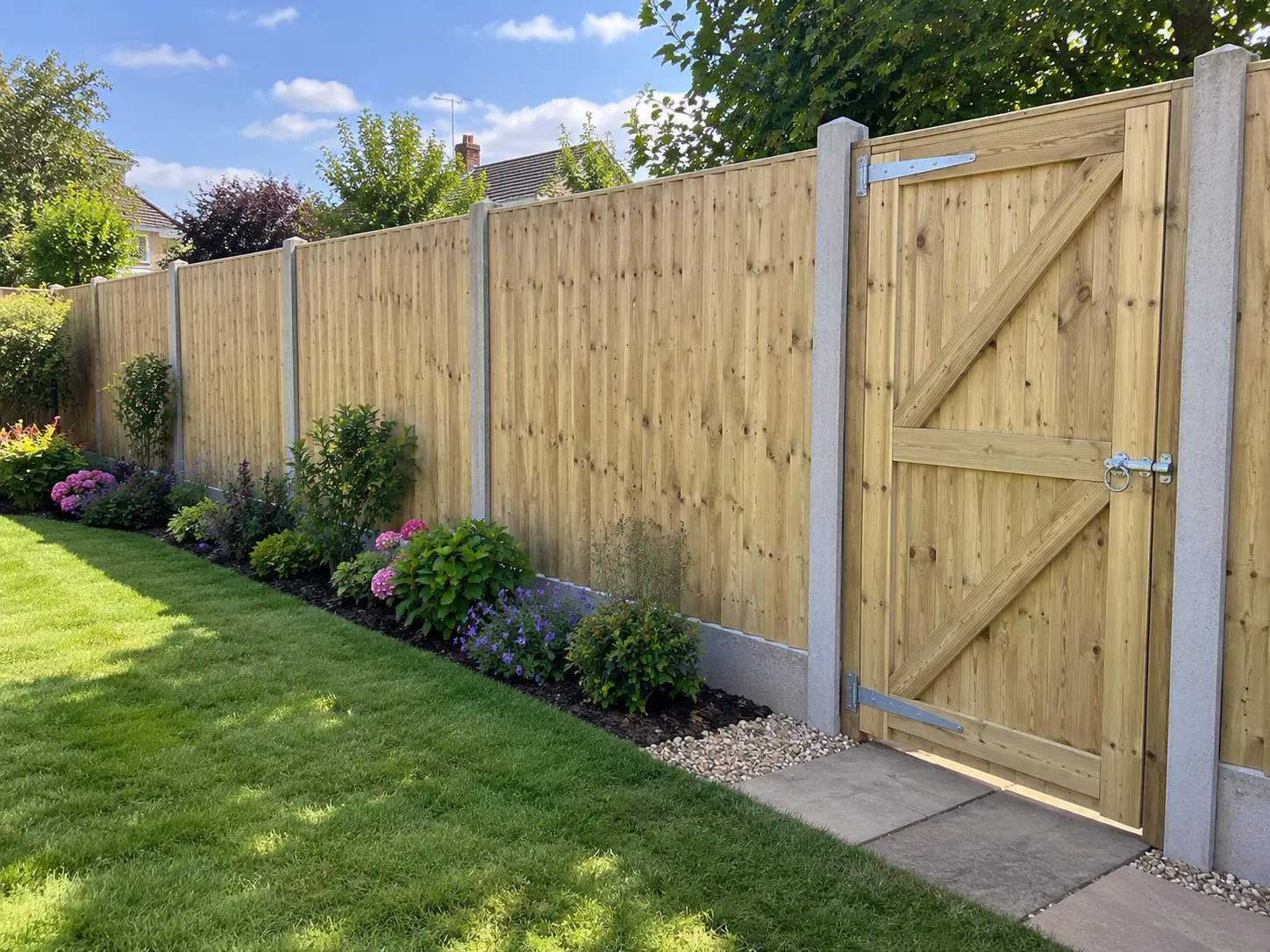
Garden fences: repair, replace or rethink?
A leaning fence rarely fails all at once. A post rots at ground level, a panel catches the wind, and one winter later a whole run is lying across the flower bed. Catching it early often means a repair instead of a replacement, and a much smaller bill.
Start with the posts
Posts carry the fence. Panels, boards and rails are cheap by comparison and easy to change. Push gently along the top of the fence: if it moves at the base, the posts are the problem. Dig back the soil around one and look at the wood just below ground. Soft, dark or crumbling timber means the post is near the end of its life, however good the panel looks.
A few failed posts can be replaced one at a time, or repaired with a concrete spur bolted alongside. If most of them are going, a full replacement is usually better value, because the labour of digging out old footings is much the same either way.
Repair is often enough when:
- Only one or two posts have failed and the rest are solid.
- Boards are split or missing but the rails and posts are sound.
- A gate has dropped because of worn hinges or a loose latch post.
Replacement makes sense when posts are failing along the line, panels have turned brittle or the fence no longer suits how you use the garden: more privacy, or a secure boundary for children and dogs.
Agree the boundary before anyone digs
Boundaries cause more fence arguments than any choice of timber. Check your property documents for which boundary you’re responsible for, and talk to your neighbour before work starts, even when the fence is clearly yours. A friendly conversation now is far easier than a dispute over a few centimetres later.
Rules on fence height, front boundaries, corner plots and fences beside roads vary from place to place. Some areas need permission above a set height or next to a highway, and listed buildings and conservation areas often have stricter rules. Ask your fencing contractor what applies, and check with your local authority if there’s any doubt.
Before digging, find out whether cables, pipes or drains cross the line of the fence. Most areas have a service for locating underground utilities. A good contractor will ask about this; if they don’t, raise it yourself.
Choose materials for how long you’ll stay
Pressure-treated softwood is affordable and easy to repair. Hardwood boards, composite panels and metal railings cost more but need less upkeep. Concrete posts and gravel boards keep timber off wet soil and are worth considering wherever the ground stays damp. Closeboard and other board-on-rail fences stand up to wind better than lightweight panels, because each board can flex.
Think about the finish too. A treated fence still needs a coat of preserver or stain every few years to look its best. If that sounds like a job you’ll never get round to, choose materials that weather well without it.
Compare quotes on the same specification
Give each fencer the same details: the length of the run, height, style, post type, any gates and whether the old fence should be taken away. Ask them to list:
- Post material, spacing and how the posts will be set.
- The board, panel or rail specification and any treatment.
- Gate hardware and how the gates will be hung.
- Removal and disposal of the old fence, and any plants that need cutting back.
- The start date, how long the job will take and what happens if the weather turns.
With matching quotes, the differences are easy to spot. One fencer may price for concrete footings and stainless fixings while another assumes reused posts. The cheaper quote isn’t always worse, but you should know what you’re buying.
Browse the fence contractor listings, add the ones that cover your area to your shortlist and message up to six at once with your measurements and photographs. The directory doesn’t vet contractors, so check insurance and references directly.